There is something almost unreasonably moving about watching a smith draw a blade from the fire. The steel glows a deep, arterial orange; the hammer falls with a ringing patience; and somewhere in that rhythm you can hear, if you listen, an unbroken line running back through centuries of British craft. I visited a small forge in the Brecon Beacons last spring and left with the distinct sense that history had not been archived there so much as put back to work.
Bladesmithing in Britain has never fully died. But the current generation of british bladesmithing craftspeople uk represents something genuinely distinct: a deliberate, conscious revival, drawing on medieval and Viking-age techniques whilst incorporating materials science and metallurgical knowledge that the old guild smiths could scarcely have imagined.
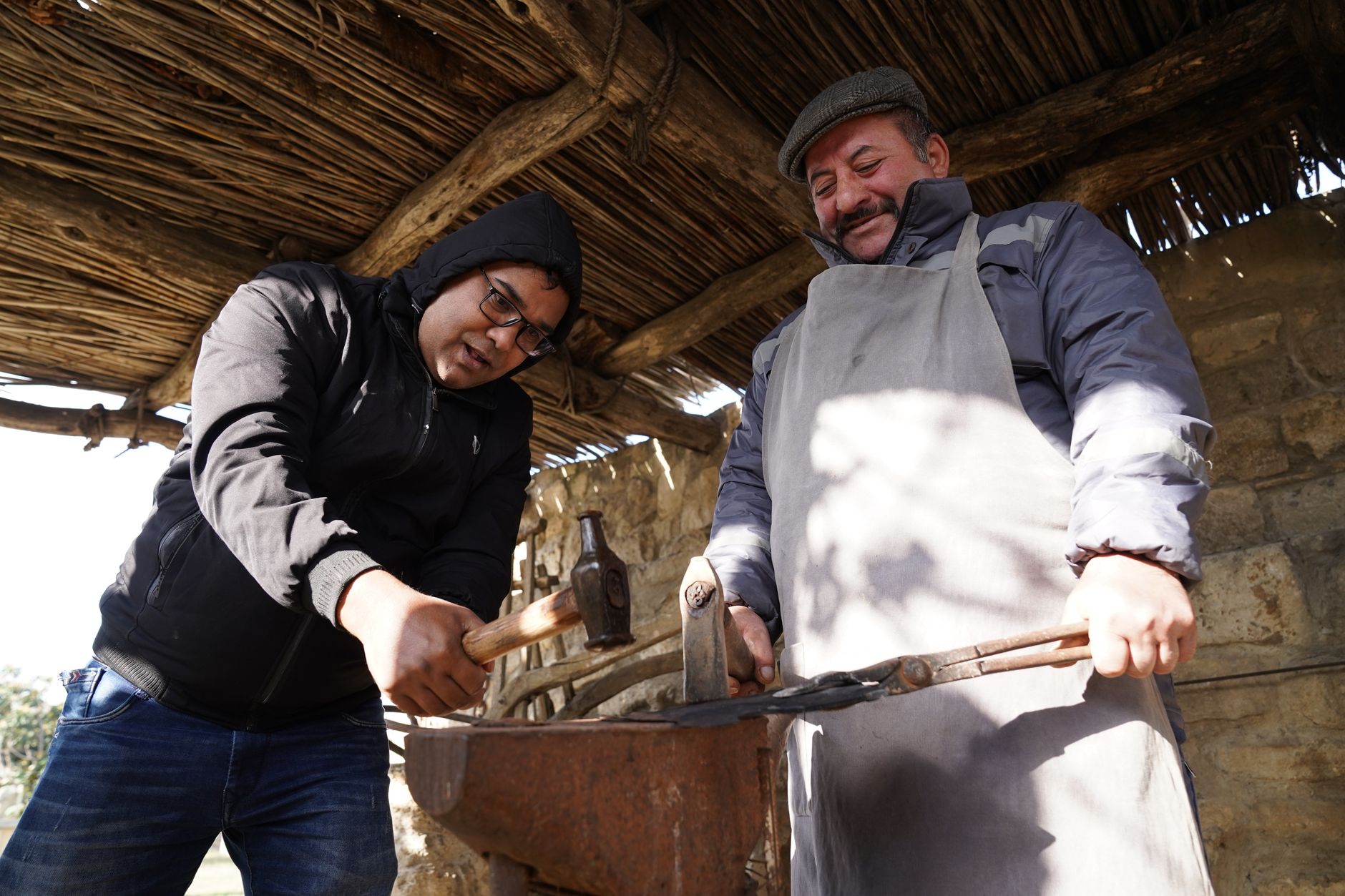
From guild halls to garden forges
Britain’s tradition of edged-weapon making stretches back at least to the Bronze Age, and by the medieval period, Sheffield had become the undisputed capital of English cutlery. The Worshipful Company of Cutlers, granted its royal charter in 1416, still exists today. For centuries, the trade was organised, industrial and fiercely localised. Then mass production arrived, Sheffield’s workshops consolidated or closed, and the hand-forging of individual blades retreated to the margins.
What is happening now is not nostalgia tourism. The smiths I have spoken to and visited are serious craftspeople, some formally trained through courses at institutions like Hereford College of Arts, others self-taught through years of trial and furnace-scorched failure. They make kitchen knives, hunting blades, historical reproductions of Saxon seaxes and medieval longswords, and bespoke pieces commissioned by collectors and re-enactors. The work ranges from practical to genuinely magnificent.
Welsh mountains and Bristol warehouses
Geography matters here, and the spread of active forges across Britain tells its own story. Rural Wales has become something of a heartland for traditional smithing, partly because land is affordable enough to build a proper forge, and partly because the culture of craft survival runs deep in those communities. One smith working near Abergavenny produces blades using wrought iron salvaged from Victorian structural components, folded and worked in a way that echoes Japanese tamahagane practice but draws deliberately on Welsh industrial heritage.
Urban workshops occupy a different space entirely. In Bristol, a cluster of independent smiths operate from repurposed industrial units, some within walking distance of each other. The city’s maker culture and the support of spaces like the Engine Shed innovation hub have created an unlikely ecosystem. These smiths are more likely to be working with modern high-carbon tool steels, using computer-modelled heat-treatment curves alongside hand-filing and traditional clay quenching. The blades look ancient. The process borrows freely from the twenty-first century.
What modern metallurgy actually changes
I asked several smiths the same question: does contemporary materials knowledge change the fundamental nature of the craft? The answers were illuminating. One Bristol-based maker put it plainly: “The old smiths worked by colour and feel because they had no choice. I work by colour and feel because it’s the right way to do it. But I also know exactly what my steel’s carbon content is, and I can heat-treat to a specific Rockwell hardness. That is not cheating. It’s the same goal pursued with better information.”
Steels like O1 tool steel, 1084 high carbon, and Swedish Uddeholm grades have become standard materials for british bladesmithing craftspeople uk who want reliability and performance. Pattern-welded steel, popularly known as Damascus, remains the most visually dramatic option; layers of different steel alloys are forge-welded together, then acid-etched to reveal the flowing grain patterns. It is painstaking, expensive, and spectacular. A well-made Damascus kitchen knife from a British independent smith can command anywhere from £300 to well over £1,000.
The legal landscape and responsible ownership
Britain’s relationship with edged weapons is shaped by law as much as tradition. The Offensive Weapons Act 2019 tightened rules around the sale and delivery of knives, and smiths selling blades online must navigate age verification requirements carefully. Fixed-blade knives with blades over three inches cannot legally be carried in public without good reason, and certain curved blade styles face outright prohibitions on sale. Responsible smiths are, in my experience, acutely aware of this. The GOV.UK guidance on buying and carrying knives sets out the law clearly, and most professional smiths direct customers to it without prompting.
Commissioned swords for collectors, theatrical productions and historical re-enactment societies occupy a different and largely uncontroversial niche. The British Federation of Historical Swordplay and the various living history societies provide steady commissions, and the relationship between maker and client in this space tends to be characterised by genuine shared enthusiasm for historical accuracy.
Passing on the fire
What gives me most confidence that this revival is substantive rather than a passing trend is the apprenticeship and workshop culture that has grown around it. The British Bladesmith Association runs meet-ups and hammer-ins where experienced smiths teach beginners, and weekend courses at forges across England, Scotland and Wales are routinely oversubscribed. YouTube has played its part in spreading technique globally, but the physical transmission of skill, standing at the anvil beside someone who has done this for twenty years, remains irreplaceable.
A young smith I met in Sheffield, completing a placement at one of the few remaining commercial cutlery firms, described her ambition with a directness I found refreshing. She wants to make pattern-welded hunting knives. She wants to supply game estates in Scotland. She has already sold twelve pieces. She is twenty-four. The craft does not feel endangered when you speak to her. It feels, if anything, hungry.
Britain made blades for the world for centuries. The british bladesmithing craftspeople uk working today are not simply preserving that history; they are arguing with it, borrowing from it and, occasionally, surpassing it. That strikes me as the most honest kind of revival there is.
Frequently Asked Questions
How do I find British bladesmithing craftspeople in the UK?
The British Bladesmith Association maintains a directory of practising smiths, and many independent makers sell through craft fairs, Instagram, and their own websites. Searching regional maker markets, particularly in Sheffield, Bristol, and rural Wales, is a reliable way to find working smiths and commission bespoke pieces.
Is it legal to buy a handmade sword or knife in the UK?
Buying a handmade knife or sword from a British smith is generally legal for adults, but strict rules govern carrying blades in public and the online sale of certain knife types. The Offensive Weapons Act 2019 introduced age verification requirements for online sales; GOV.UK publishes up-to-date guidance on what is and is not permitted.
How much does a handcrafted blade from a British smith typically cost?
Prices vary enormously depending on complexity, steel type and the maker’s reputation. A well-made kitchen knife in high-carbon steel might start around £150 to £250, while a pattern-welded Damascus blade or a commission-forged historical sword can run to £500-£2,000 or beyond. Bespoke work always commands a premium.
What is the difference between pattern-welded (Damascus) steel and regular high-carbon steel blades?
High-carbon steels like O1 or 1084 are single-composition alloys heat-treated to achieve hardness and edge retention; they are practical, consistent and widely used. Pattern-welded Damascus combines multiple steel alloys forge-welded together, producing distinctive visual patterns when etched with acid. Both can produce exceptional blades; Damascus is primarily distinguished by its striking aesthetics and the considerable additional labour involved.